
Beginner's Guide to Taiwanese Oolong: Baozhong, Dong Ding, and High-Mountain Styles
Taiwanese oolong is a good entry point if you like green tea but want more perfume, or drink black tea and want something lighter. The island makes a wide range of styles, but three families cover most of what you will find on a shelf: Baozhong, Dong Ding, and high-mountain oolong. They differ in where they grow and how they are processed, and each asks for slightly different handling in the pot. Learn these three and you can read almost any Taiwanese oolong label with confidence.
What Sets Taiwanese Oolong Apart
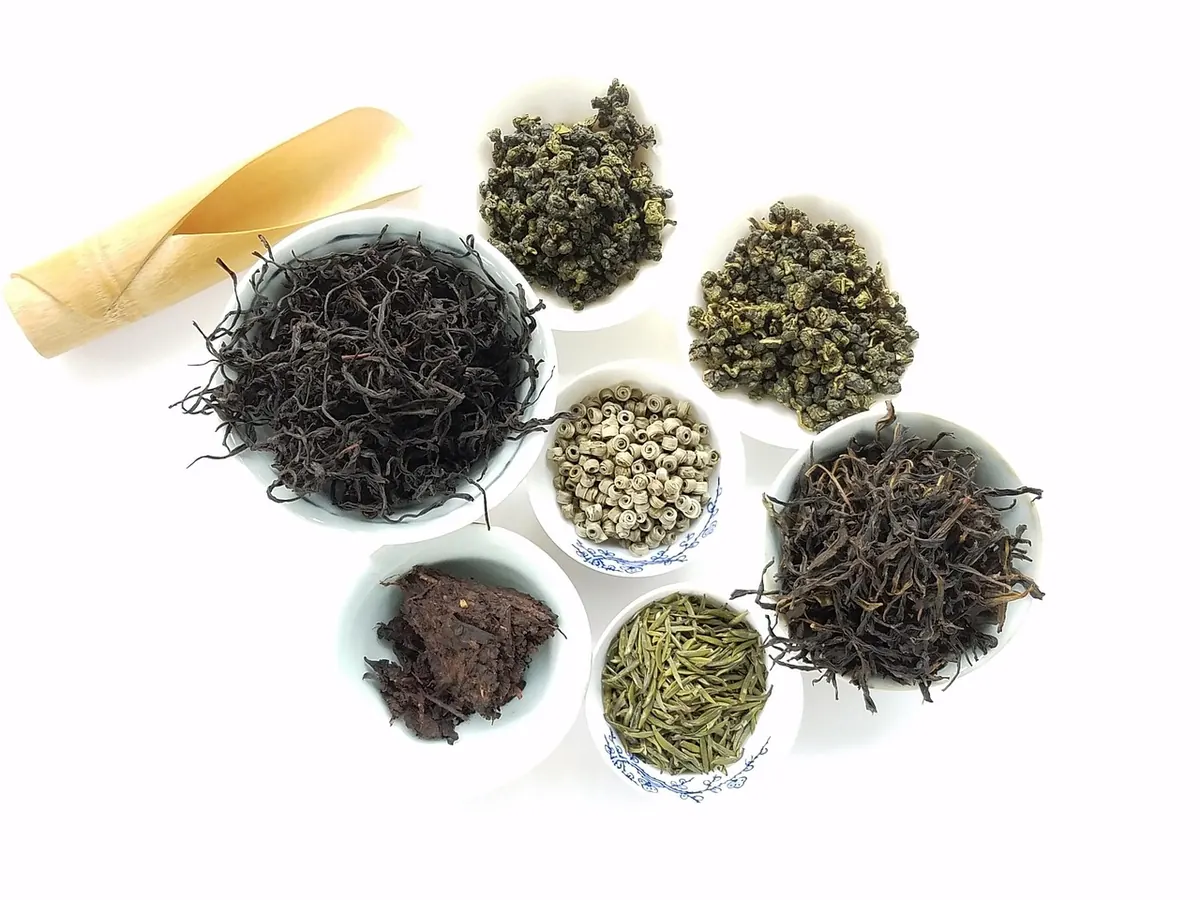
Oxidation in these teas usually lands somewhere between 10 and 30 percent, closer to green tea than to black, though traditional Dong Ding pushes higher. Two other choices matter just as much. Rolling: Baozhong is left in long twisted strips, while Dong Ding and high-mountain teas are rolled into tight balls that unfurl slowly across many infusions. Roasting: some are finished over charcoal or in an electric roaster, others are not roasted at all. Add altitude and you have the basic map.
One practical consequence: light, unroasted teas live and die by their aroma, so freshness matters more than age. Roasted teas are more forgiving and keep far longer. Neither style is better; they reward different habits.
Baozhong: Floral, Light, and Forgiving
Baozhong comes from northern Taiwan, around Pinglin, Shiding, and the Wenshan hills outside Taipei. The leaves are twisted rather than ball-rolled, so they look like a slender green tea and give up their flavor quickly. Oxidation is low and the tea is usually unroasted.
Expect lilac and gardenia on the nose, sometimes a hint of fresh corn or butter. The body is light and the finish sweet. You are paying for aroma rather than thickness here, so smell the empty cup after you pour it out. That is where a good Baozhong shows off, and where a tired one gives itself away.
Because it is so lightly processed, Baozhong fades faster than the other two. Buy it in small amounts, keep the bag sealed, and drink it within the year. Brew it cooler than you think: 85 to 90°C, 3 to 4 grams per 150 ml, first steep around 45 to 60 seconds in a gaiwan or a plain glass. Boiling water flattens the flowers into something that tastes like steamed vegetables.
Dong Ding: Roast, Sweetness, and Comfort
Dong Ding, sometimes spelled Tung Ting, is named for a mountain in Lugu, Nantou, in central Taiwan. The traditional style — medium oxidation, medium roast, ball-rolled leaves — tastes like toasted nuts, brown sugar, and cooked stone fruit, with a woody edge in heavier roasts. The liquor is amber, the body is round, and the aroma is quieter and deeper than a high-mountain tea.
Most Dong Ding sold today is lighter than the old-school version: less roast, more lifted aroma, closer to a high-mountain oolong. That is not a counterfeit; the category has simply widened. If you want the traditional cup, look for words like "traditional" or "medium roast" and expect a darker liquor rather than a pale green one.
Roast brings warmth and shelf life, which is why this is a good cold-weather tea and a safe one to keep on hand. Brew at 95°C or just off boiling, about 5 grams per 100 ml, first steep 30 to 40 seconds. If later steeps turn dry or ashy, shorten them rather than lowering the temperature — roast responds better to less time than to cooler water.
High-Mountain Oolong: The Alpine Style
Gaoshan simply means high mountain, and the names to know are Alishan, Lishan, Shanlinxi, and Dayuling. These gardens sit roughly above 1,000 meters, where cool, misty weather slows the leaves down. Most are made from the Qingxin cultivar, lightly oxidized, ball-rolled, and finished with little or no roast.
The flavor is creamy and buttery up front, then orchid, lilac, and a sugarcane sweetness that lingers. The signature is a long finish and a soft, coating mouthfeel. Taiwanese drinkers call this shan yun, "mountain charm" — a loose term for that cool, throat-filling quality. Spring and winter picks are the ones worth seeking out. Many drinkers find spring tea more openly floral and winter tea denser and creamier; buy both and decide for yourself.
Brew at 90 to 95°C with a generous amount of leaf — 5 to 6 grams per 100 ml, since the balls need room to expand — and keep the early infusions short, around 30 to 45 seconds. Good examples keep going for six steeps or more.
Brewing All Three: A Practical Cheat Sheet
You do not need a shelf of equipment. A 100 to 120 ml gaiwan, a kettle, and a cup will do for all three.
- Baozhong: 85–90°C, 3–4 g per 150 ml, 45–60 seconds, then add 10 seconds per steep. Two to four good infusions.
- Dong Ding: 95°C to just off boiling, 5 g per 100 ml, 30–40 seconds, then add 5–10 seconds. Four to six infusions.
- High mountain: 90–95°C, 5–6 g per 100 ml, 30–45 seconds, then add 5–10 seconds. Six or more infusions.
- Water: use filtered water with low mineral content. Hard water mutes aroma and turns light oolongs harsh.
- Vessel: preheat it. A cold gaiwan steals heat from the first steep, which is the steep that matters most.
Two adjustments that fix most bad cups
If a cup tastes bitter or drying, your water was too hot or the steep ran long. Lower the temperature first, then shorten the time. If it tastes thin and watery, add leaf instead of time. Longer steeping mostly extracts bitterness and tannin; more leaf extracts flavor and body together.
Do not skip the empty cup
After you pour off, smell the gaiwan lid and the empty cup while they are hot, then again a minute later. The aroma shifts as it cools, and that second sniff tells you more about quality than the first sip does.
Start With a Tasting Flight
The fastest way to learn these three is to brew them side by side in one sitting, using the same water and the same vessel. Buy 25 to 50 grams of each rather than a large bag of one; the comparison teaches you more than any description can. Taste light to dark — Baozhong, then high mountain, then Dong Ding — so the roast does not coat your palate for everything that follows.
Keep your notes short: aroma, body, finish, and how the tea changes between the third and fifth steep. Those few lines will improve your brewing more than any gear upgrade.
For storage, keep the tea airtight and out of light, away from spices and coffee; an ordinary tin in a cupboard is fine. Drink fresh Baozhong within months, high-mountain tea within a year or two, and roasted Dong Ding whenever you like — it holds up well. When you find one you love, buy it again the next season and brew it the same way. Repetition, not novelty, is what makes a tea finally click.
Photo: farwestteatraders / Pixabay